Live Odds Movement in Basketball: Real-Time Line Tracking
 Available in US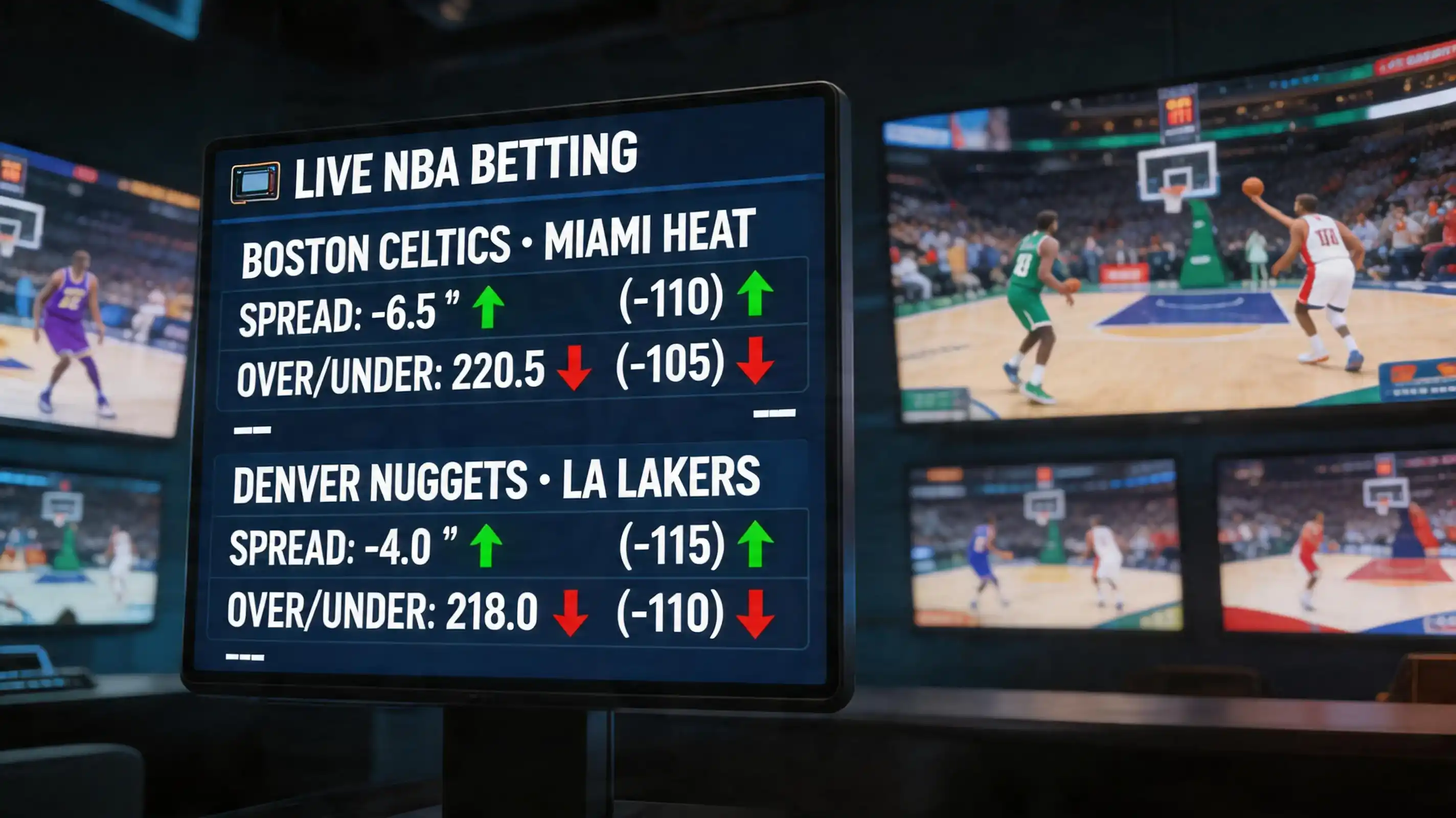
I was watching a Nuggets game last season when the spread moved a full point in thirty seconds — no timeout, no injury, no obvious cause. Five minutes later, the broadcast announced Nikola Jokic was heading to the locker room with an apparent ankle issue. Someone had known before the cameras caught it, and their money had moved the market. That lag between informed action and public knowledge defines the live odds landscape.
Modern sportsbooks recalculate basketball odds every 200-500 milliseconds, processing score changes, momentum shifts, and proprietary signals faster than humans can consciously react. Understanding what drives these movements — and distinguishing meaningful signals from noise — creates opportunities for bettors willing to read the market rather than just watch the game.
Analysing Triggers for In-Play Odds Shifts
Score changes drive the most obvious line movements. When a team scores, their spread improves and their opponent’s spread worsens. The adjustment magnitude depends on game state — a three-pointer in the first quarter moves lines less than one with 90 seconds remaining. Algorithms weight recent events by their expected impact on final outcome.
Momentum patterns trigger secondary adjustments. A team completing a 12-0 run sees their odds improve beyond what raw score change suggests, because the algorithm extrapolates that momentum forward. Whether this extrapolation is accurate remains debatable, but markets clearly react to runs as distinct from equivalent scoring spread across more possessions.
Injury information creates sharp, sudden movements. A star player going to the bench for treatment might shift a spread two points before any official announcement. The speed of adjustment depends on information flow — video feeds available to traders show injuries before broadcast commentary catches up.
Foul trouble produces more gradual movements. A star picking up his third foul midway through the second quarter faces limited minutes the rest of the half. Spreads adjust to reflect diminished production, though the market sometimes underweights foul trouble’s cascading effects on team rotation and defensive schemes.
Timeout usage affects short-term odds movements. A coach calling timeout to stop a run signals concern about momentum that algorithms incorporate. The market might actually move against the team calling timeout briefly, reflecting the admission that things have gone poorly.
Interpreting Shifts
Not all line movements deserve attention. Small fluctuations within a half-point range represent normal market noise — balanced two-way action seeking equilibrium. Significant movements of a full point or more, especially without obvious cause, signal something the market knows that casual observers don’t.
Speed of movement matters. Gradual drift over several minutes reflects accumulating public action. Sharp spikes in seconds suggest informed money hitting the market. The latter demands investigation; the former merely reflects crowd behaviour.
Direction relative to visible events reveals hidden information. If a team scores and their odds worsen rather than improve, something else is happening — perhaps a key player limping, perhaps sharp money betting the other way. Counterintuitive movements deserve the closest scrutiny.
Quarter transitions produce systematic movements worth understanding. Third-quarter lines often differ substantially from halftime lines based on early second-half performance. These adjustments tend to overweight recent action and underweight expected regression, creating potential value for bettors who understand mean reversion.
Recovery patterns after sharp movements tell their own story. If a line spikes two points then gradually returns toward its original level, the initial movement may have been overreaction. If it holds or continues moving, the market has absorbed new information and repriced accordingly.
Comparing movements across multiple sportsbooks identifies consensus versus outlier pricing. When one book moves sharply while others hold steady, that book may have received one-sided action specific to their customer base. When all books move together, something fundamental has changed.
Sharp Versus Public
Sharp money — bets from respected, profitable accounts — moves lines. Public money — recreational bets spread across many small accounts — typically follows lines. Distinguishing which type is driving movement helps predict whether the movement will continue or reverse.
Sharp action tends to hit early, when markets are softest and mispricing most likely. Public action concentrates near game time and during obvious moments — after big runs, near the end of games, on televised matchups. The timing of movement often reveals its source.
Books limit sharp bettors because their action predicts outcomes. If a sportsbook is taking heavy action from accounts they’ve identified as sharp, they’ll move lines aggressively even if their overall liability doesn’t require adjustment. These defensive moves create phantom line movements unrelated to balanced action.
Reverse line movement occurs when public money flows one direction but the line moves the other way. This signals sharp action betting against the crowd. Identifying reverse movement in real time requires comparing bet counts, dollar volumes, and line direction — information some tracking services provide.
Following sharp action without understanding the underlying thesis is dangerous. Sharp bettors have edges in specific situations, not universal insight. Their live action might reflect matchup-specific knowledge you lack. Copying movements blindly often captures none of the edge while absorbing all of the variance.
Reaction Timing
Acting on line movements requires speed that most recreational bettors cannot achieve. The edge from identifying mispricing evaporates within seconds as algorithms and other observers react. By the time you’ve processed what happened and navigated to place a bet, the value may have disappeared.
Latency disadvantages compound in live betting. Professional operations use direct data feeds and colocated servers to achieve sub-100 millisecond response times. Retail bettors working through mobile apps face delays of several hundred milliseconds at minimum. That gap means you’re often betting on stale odds.
Anticipation beats reaction. Rather than chasing movements after they happen, position yourself ahead of predictable patterns. If you expect a trailing team to mount a fourth-quarter comeback, bet before the run starts rather than after the market has already adjusted.
Selective engagement preserves edge. Rather than trying to react to every movement, identify specific patterns where your read on the game differs from the market’s read. Focus your attention on those moments, ignoring the noise that fills the rest of the broadcast.
Cash-out calculations incorporate line movement in ways that can disadvantage bettors. When lines move against your position, cash-out offers decline faster than the underlying movement suggests fair. Understanding this asymmetry helps evaluate whether holding or cashing represents better expected value.
For broader context on applying these insights to in-game decisions, live basketball betting fundamentals explores timing and strategy frameworks.
How quickly do live basketball odds update during games?
Modern sportsbooks recalculate odds every 200-500 milliseconds, processing score changes, momentum patterns, and injury information faster than human reaction. Professional traders with direct data feeds see movements before retail bettors, creating latency disadvantages of several hundred milliseconds for those using standard betting apps.
What causes sudden line movements in basketball betting?
Sharp movements without obvious cause typically signal injury information, sharp money hitting the market, or insider knowledge reaching traders before public broadcasts. Gradual movements reflect accumulating public action. Counterintuitive movements — lines worsening after a team scores — suggest hidden factors the market has priced that casual observers haven’t noticed.
Written by the editors at Live Basketball Betting.