Basketball Quarter Betting: Q1-Q4 Odds and Market Analysis
 Available in US
The bet that changed how I think about basketball markets was not on a game outcome or even a spread. It was a fourth quarter under in a midseason contest between two playoff teams. Both squads had averaged 115 points per game entering the night, but with four minutes remaining and a comfortable nine-point margin for the home side, the fourth quarter total sat at a mere 41.5. I took the under and watched as both teams combined for just 38 points in the period – a product of deliberate pace manipulation that the full-game totals had completely obscured.
Quarter betting splits basketball into its natural components and reveals patterns that disappear when you view the game as a monolithic 48-minute contest. Research analysing thousands of NBA games shows that 19% are ultimately decided in the fourth quarter, where pace drops dramatically to 90-100 possessions compared to earlier periods. That compression creates predictable scoring differentials between quarters – differentials that the betting markets do not always price correctly.
This guide breaks down each quarter and half as distinct betting markets with their own characteristics. I have tracked quarter-by-quarter performance across multiple seasons, and the patterns are remarkably consistent. First quarters behave differently from fourth quarters. First halves and second halves might as well be different sports. Understanding these distinctions is the foundation of profitable period betting.
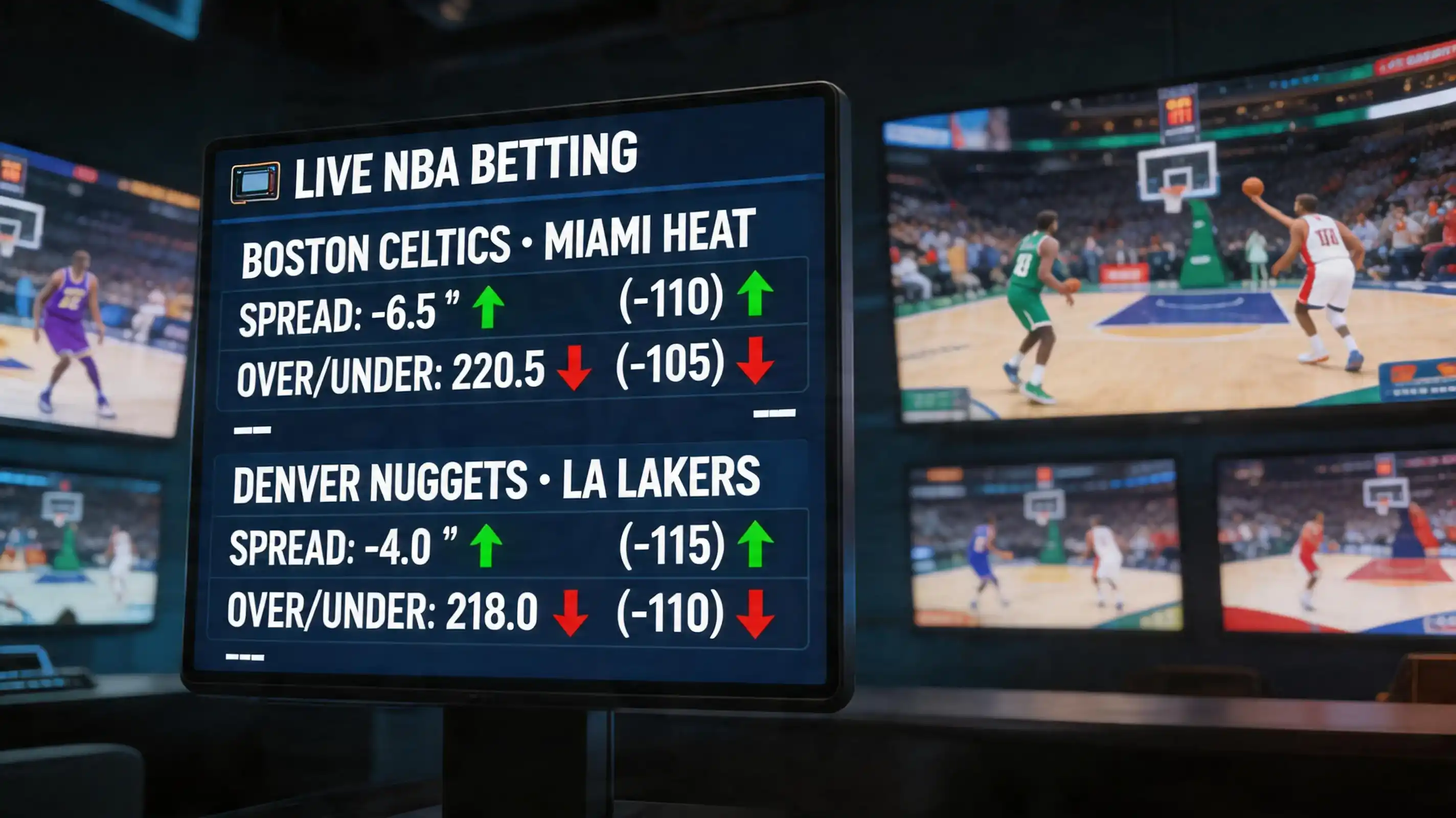
When targeting specific periods, it is crucial to understand live basketball odds movement to catch the best lines before the bookmakers adjust.
Analysing Q1-Q4 Betting Dynamics and Scoring Trends
Walk into any sportsbook conversation about basketball betting and you will hear endless discussion of game totals and full-game spreads. Ask about quarter dynamics and you will get blank stares. This knowledge gap is where value lives.
Each quarter of an NBA game operates under different conditions. Fresh legs in the first quarter produce different basketball than fatigued muscles in the fourth. Strategic adjustments at halftime reset game flow. Garbage time in blowouts distorts fourth quarter statistics. These factors create distinct scoring and competitive patterns for each twelve-minute segment.
The research is unambiguous on physical decline. Effect sizes measuring the drop-off between first and fourth quarter performance reach -1.27 on standardised metrics – a substantial degradation that manifests in shooting percentages, defensive contest rates, and turnover frequency. This decline is not linear across quarters. Players maintain performance through the first half reasonably well, show some decline in the third quarter, then demonstrate measurable falloff in the fourth.
For betting purposes, this means each quarter should be analysed independently rather than as a fraction of the full game. A team averaging 28 points in first quarters and 24 points in fourth quarters will see very different value in period markets depending on which twelve minutes you are betting. The oddsmakers know this in aggregate, but their quarter lines often fail to account for specific game situations and matchup dynamics.
I have found the most consistent edge in fourth quarter markets, specifically unders, because the pace and scoring compression late in games is more predictable than first quarter variance. But opportunities exist across all periods for those willing to track the patterns.
First Quarter Trends
First quarters are the wild west of basketball betting. Teams come out with varying levels of intensity, game plans that have not yet been tested against real opposition, and fresh legs that can produce explosive scoring or sloppy execution in equal measure.
The variance in first quarter outcomes exceeds any other period. I have tracked this extensively, and first quarters produce the widest range of scoring differentials relative to expectations. A team might come out on fire and lead by twelve, or sleepwalk through the opening period and trail by eight. Neither outcome necessarily predicts how the remaining three quarters will unfold.
This variance cuts both ways for bettors. First quarter spreads are harder to predict than full-game spreads because the sample of possessions is small and the game has not yet settled into recognisable patterns. However, first quarter results provide information that the live betting market sometimes fails to properly weight for the remainder of the game.
Teams that fall significantly behind in first quarters – by ten or more points – recover to win or cover the full-game spread more often than casual observers expect. The first quarter is often about rhythm and adjustment rather than fundamental superiority. A team shooting 25% from three in the first quarter will almost certainly improve. A team getting killed on the glass might make a lineup adjustment. The panic that sometimes hits live markets after a bad first quarter often creates value on the trailing side.
My approach to first quarter betting is selective. I avoid spread bets in this period because the variance is too high for the edge to overcome the vigorish. First quarter totals offer slightly better value because scoring variance works in both directions, and overs and unders balance out over large samples. But my primary use of first quarter analysis is informing live bets for the remainder of the game rather than betting the period itself.
Second Quarter Patterns
The second quarter is where basketball games begin to take shape. Coaches have seen what works and what does not. Rotation patterns are established. The initial adrenaline has faded, but fatigue has not yet set in. This is often the most representative quarter of how a game will ultimately play out.
Bench depth becomes a factor in second quarters. Teams with strong reserve units often make their move during the middle portion of the first half, when opposing starters rest and their own second unit can exploit matchups. Tracking each team’s bench scoring differential provides genuine insight into second quarter outcomes.
Defensively, second quarters tend to tighten compared to first quarters. Teams have had time to adjust their schemes to what the opponent is actually running rather than what they expected from film study. This adjustment period typically produces slightly lower scoring than first quarters, though the effect is modest.
For betting purposes, second quarters offer more predictable outcomes than first quarters but less dramatic inefficiencies than fourth quarters. I view this period as an information-gathering phase rather than a primary betting target. Watching how teams perform in the second quarter – particularly how their defensive adjustments hold up and how their bench units compete – provides crucial context for second-half betting.
The exception is when a team with significant bench advantage faces an opponent playing heavy starter minutes in the first quarter. That bench advantage often manifests in the second quarter, creating spread value that pre-match lines might not fully capture.
Third Quarter Analysis
The third quarter has earned a reputation in basketball circles as the period where games are won and lost. Coming out of halftime, teams execute their adjusted game plans, and the results often determine who controls the final twelve minutes.
Post-halftime adjustments create volatility that the betting markets struggle to price. A coaching staff has had fifteen minutes to identify problems and implement solutions. A player who was ineffective in the first half might be schemed into better positions. A defensive approach that was getting shredded might be completely overhauled. These adjustments can produce third quarters that look nothing like the first half.
I pay particular attention to third quarter performance differential between teams. Some coaches are consistently better at halftime adjustments than others. Some teams have the personnel to execute multiple schemes, while others are locked into their primary approach regardless of its effectiveness. Tracking these patterns over seasons reveals genuine edges.
The momentum element is strongest in third quarters. Teams that come out with energy after halftime often extend leads or erase deficits before the opponent can counter-adjust. This early third quarter window – roughly the first four minutes after halftime – produces some of the most volatile live betting moments of any game. I typically avoid live bets during this stretch because the uncertainty is too high, then look for value once the dust settles and the third quarter’s character becomes clear.
Physical fatigue begins to manifest in third quarters, though it is not yet dominant. Teams on the second night of back-to-backs often show their first visible signs of tiredness in this period. The research on performance decline between quarters suggests the third quarter represents a transitional phase – not yet the dramatic dropoff of the fourth quarter, but no longer the fresh-legged execution of the first half.
Fourth Quarter Unders
If there is a single market where I have found consistent long-term value, it is fourth quarter unders in games that are not competitive blowouts but are also not coming down to the final possession.
The mathematics of fourth quarter scoring create structural edges for under bettors. Pace compression in the final period – dropping to 90-100 possessions compared to 105-110 in earlier quarters – mechanically reduces total points. Physical decline with an effect size of -1.27 between first and fourth quarters further suppresses scoring. And strategic considerations favour the team ahead, who wants to run clock rather than generate additional scoring opportunities.
The key is identifying which games will follow this pattern. Blowouts do not – teams down by twenty-five with six minutes left will not slow down, and the winning team might rest starters, creating chaotic scoring patterns. Nail-biters do not – games that remain within three points are played at maximum intensity with fouling strategies that actually increase scoring. The sweet spot is games with margins between six and fifteen points entering the fourth quarter.
In these middling games, the leading team wants to manage the clock and avoid mistakes. The trailing team is not desperate enough to foul but cannot fully push pace without surrendering transition opportunities. Both teams play more carefully, take fewer risks, and generate fewer high-quality shots. The result is fourth quarters that consistently fall under totals calibrated on full-game pace data.
I have tracked fourth quarter unders in games matching this profile for years, and the hit rate is genuinely impressive. The edge is not enormous – we are talking about 53-55% win rates rather than massive advantages – but the consistency makes it one of my most reliable betting angles. The fourth quarter under in a game with a comfortable but not insurmountable lead is as close to a structural inefficiency as basketball betting offers.
Half Betting Strategy
Half betting sits between full-game wagers and quarter bets in both sample size and predictability. Twenty-four minutes provides enough possessions to smooth out variance while still isolating distinct phases of the game.
The fundamental insight about half betting is that the two halves are not simply halves of the same game. First halves are played under one set of conditions – pre-adjustment basketball where teams execute their prepared game plans. Second halves are played under different conditions – post-adjustment basketball where coaches have responded to what they have observed. Treating these as interchangeable is a mistake.
First half markets correlate more strongly with season-long team statistics. The best offensive teams tend to score well in first halves because defences have not yet adapted. The best defensive teams tend to suppress scoring in first halves because their systems are well-prepared. Second half markets show more variance from team averages because in-game adjustments introduce volatility.
For live betting purposes, halftime represents the single most important inflection point of any game. The market must reprice everything based on twenty-four minutes of actual performance data. Teams trailing at halftime get adjusted lines that sometimes offer genuine value. Teams leading get compressed odds that sometimes overestimate their ability to maintain performance. The halftime break is my favourite window for placing basketball wagers.
I structure my approach around using first half results to inform second half bets rather than betting first halves blind. Watching how a game unfolds provides information that pre-match handicapping cannot capture. By halftime, I know whether the game is being called tightly or loosely, which players have rhythm, and which matchups are determining outcomes. That information shapes second half betting decisions.
First Half Markets
First half betting appeals to bettors who want results before stepping away from their screens. The market for first half spreads and totals is deep and liquid, offering lines close to half the full-game numbers with slight adjustments for expected first half patterns.
The spread relationship between first half and full game is not perfectly linear. Teams with strong starts – those that historically outperform in first halves relative to full games – offer value when first half lines are set mechanically at half the full-game spread. Similarly, slow-starting teams can be faded in first halves even when they represent good full-game value.
Totals in first halves tend to run slightly higher than half the full-game total because fourth quarter pace compression is not yet a factor. Fresh legs and aggressive early approaches typically produce first halves in the 55-58 points per team range for high-scoring matchups, even when full-game projections suggest more modest fourth quarter contributions.
My first half betting is concentrated on totals rather than spreads. The variance in first half outcomes makes spread betting difficult unless you have strong conviction about pace and early game script. Totals offer a cleaner proposition – will scoring be high or low given the matchup and referee assignment? The factors that drive first half scoring are more predictable than the factors that determine who gets the better of the early game.
Referee tendencies matter significantly for first half betting. Crews that call tight games produce lower-scoring first halves as teams adjust to what is and is not being whistled. Crews that let physical play go produce higher-scoring first halves with more continuous action. I track referee assignment as a standard part of my first half analysis.
Second Half Live Opportunities
Peter Funk from Turner Sports captured something important when he noted that real-time betting and micro-betting are probably the future of sports betting. Second half markets sit at the intersection of live betting and period betting, combining the information advantage of having watched the first half with the structural characteristics of second half basketball.
The halftime adjustment factor creates genuine inefficiencies. Oddsmakers must price second half lines quickly, typically within minutes of halftime arriving. They rely on algorithms that weight first half performance heavily, sometimes too heavily. A team that struggled offensively in the first half due to poor shooting rather than schematic problems might be undervalued for the second half when regression to the mean suggests improvement.
I look for specific patterns when evaluating second half opportunities at halftime. Teams trailing by eight to twelve points after shooting poorly from three – particularly if their shot quality was good – often represent value. Teams leading because of unsustainable first half shooting percentages might be overpriced for second half continuation. The key is distinguishing between first half outcomes driven by variance versus those driven by fundamental advantages.
Fatigue effects begin to matter more in second half betting. NBA live betting strategy accounts for scheduling factors that compound over forty-eight minutes. A team on a back-to-back might look fine in the first half, then fade in the second as physical demands accumulate. Second half lines set at halftime do not always fully incorporate this expected decline.
The third quarter specifically offers a betting window that combines live betting flexibility with period market structures. Waiting until five minutes into the second half to assess post-halftime adjustments, then betting quarter or half markets based on what you observe, represents a hybrid approach that leverages the best elements of both betting styles.
Alternative Lines in Period Betting
Standard quarter and half markets offer spreads and totals at typical juice. But the real opportunity in period betting often lies in alternative lines – adjusted numbers with corresponding adjusted odds that create asymmetric payoff profiles.
Alternative quarter totals are my preferred use of this market. If a standard fourth quarter total sits at 52.5, alternative lines might offer 48.5 at -180 or 56.5 at +150. In games fitting the fourth quarter under profile I described earlier, the 48.5 at -180 can represent better expected value than the standard under at -110 because the compression effect is dramatic enough to cover the extra points.
Quarter spreads with adjusted lines work best for isolating momentum effects. A team that has won the last two quarters by a combined sixteen points might be offered at -6.5 for the next quarter at plus money. If you believe the momentum is sustainable based on the factors I have outlined – defensive intensity, rebounding dominance, sustainable shot creation – that alternative line captures more upside than the standard -2.5.
The challenge with alternative lines is that the juice adjustments can erode edge quickly. A two-point move on a quarter spread at -110 to -110 becomes less attractive when the adjusted line carries -150 juice. I calculate implied probabilities for each alternative line and compare them to my estimated probabilities, only betting when the difference exceeds the additional vigorish.
Period betting alternatives also allow for hedging full-game positions. If you hold a full-game under but the first half runs hot, taking an alternative second half under at a higher total can reduce variance while maintaining position in your core thesis. This flexibility is one of the underappreciated advantages of markets that break games into component parts.
Quarter Totals
Quarter totals are set by dividing the full-game total by four and then adjusting for expected quarter-by-quarter scoring patterns. These adjustments create opportunities when the full-game total is mispriced or when specific quarter effects differ from the standard expectations.
First quarter totals typically run slightly higher than a straight division would suggest. The combination of fresh legs and aggressive early play pushes scoring above the per-quarter average. Fourth quarter totals run lower, reflecting pace compression and fatigue. Second and third quarters sit closer to the average, with third quarters sometimes slightly elevated due to post-halftime energy bursts.
I find the most value in quarter totals when I disagree with the full-game total’s assessment of pace. If the market has set a full-game total at 220 but I believe the actual pace will produce something closer to 210, quarter unders become attractive across all four periods. Rather than taking a full-game under with maximum exposure, spreading bets across quarter unders allows for more granular position building and potential profit even if one quarter runs unexpectedly high.
Specific matchup effects can make quarter totals more predictable than full-game totals. A team that consistently starts slowly but finishes strong will see first quarter unders hit more often than fourth quarter unders. A team with weak bench depth might fade in second quarters when rotations lighten. These team-specific patterns show up in quarter results more clearly than in full-game aggregates.
Weather and arena factors occasionally influence quarter totals in predictable ways. Early games in certain arenas – particularly those in cold climates during winter – sometimes produce slower first quarters as players and officials settle into the environment. These micro-factors rarely matter for full-game betting but can tip quarter betting decisions.
Quarter Spreads
Quarter spreads carry the same fundamental challenge as first half spreads – smaller sample sizes increase variance and reduce predictability. But they also offer unique opportunities for bettors willing to dig into team-specific patterns.
The relationship between full-game spreads and quarter spreads is not linear. A team favoured by eight points for the full game will not necessarily be favoured by two points in each quarter. Teams with strong first quarter track records might be -2.5 in Q1 and -1.5 in subsequent quarters. Teams that close strong might see fourth quarter spreads exceed their per-quarter average.
I use quarter spread analysis primarily to identify when markets have miscalibrated team tendencies. A team that consistently wins third quarters by a larger margin than their full-game performance suggests is being undervalued in that specific period. The vigorish on quarter bets means the edge needs to be larger than for full-game bets, but genuine edges do exist.
Live quarter spread betting offers more value than pre-match quarter betting in most situations. Once a game has started, you have information about how the teams are matching up, which players have rhythm, and how officials are calling the contest. That information can identify quarter spread value that pre-match analysis missed.
Momentum considerations dominate late-quarter spread decisions. A team that has won the last six minutes of play by twelve points will be significantly favoured in the next quarter spread, sometimes by more than their overall game position justifies. These momentum-driven quarter spreads often overcorrect, creating contrarian value on the team that just struggled but is likely to regress toward their mean performance.
Discover more period-by-period breakdowns and winning methodologies at HoopLines, your trusted source for sports analytics.
Frequently Asked Questions
Why are fourth quarter unders statistically profitable in basketball?
Fourth quarter unders benefit from three structural factors: pace compression drops possessions to 90-100 compared to 105-110 in earlier quarters, physical fatigue reduces shooting efficiency with an effect size of -1.27 from first to fourth quarter, and strategic considerations favour leading teams who want to run clock rather than generate scoring opportunities. Games with margins between six and fifteen points entering the fourth quarter show the strongest under patterns.
What factors influence first quarter betting outcomes?
First quarter outcomes show the highest variance of any period due to limited possessions and unpredictable early game execution. Teams come out with varying intensity levels, game plans that have not been tested against live opposition, and can either explode or sleepwalk through the opening twelve minutes without that performance predicting the remaining quarters. First quarter analysis is most valuable for informing live bets on subsequent periods rather than betting the quarter itself.
How does scoring pace differ between basketball quarters?
First quarters typically produce slightly higher scoring due to fresh legs and aggressive opening approaches. Second quarters often tighten as defensive adjustments take hold. Third quarters show volatility from halftime adjustments, with some teams consistently outperforming in this period. Fourth quarters demonstrate the most dramatic pace compression, with combined scoring often falling 10-15% below earlier quarter averages when the game margin is comfortable but not a blowout.
Should I bet quarters or full game markets in live betting?
Quarter markets offer advantages when you want to isolate specific game situations or limit exposure to extended variance. Full game markets provide more possessions for regression to the mean. The optimal choice depends on your edge – if you identify a factor affecting only one quarter like fatigue manifesting in the third or pace compression in the fourth, quarter betting captures that edge more efficiently than full-game positions.
Written by the editors at Live Basketball Betting.