Basketball Cash Out Betting: Early Settlement and Profit Locking
 Available in US
The cash-out offer sat at 340 pounds. My original stake was 50, my potential payout was 450, and the Celtics led by 8 with four minutes remaining. I stared at the button, did rough maths in my head, and decided to let it ride. Boston promptly surrendered an 11-0 run and lost by 4. That 340 pounds I declined became nothing. The memory of that decision shapes how I think about cash-out strategy to this day.
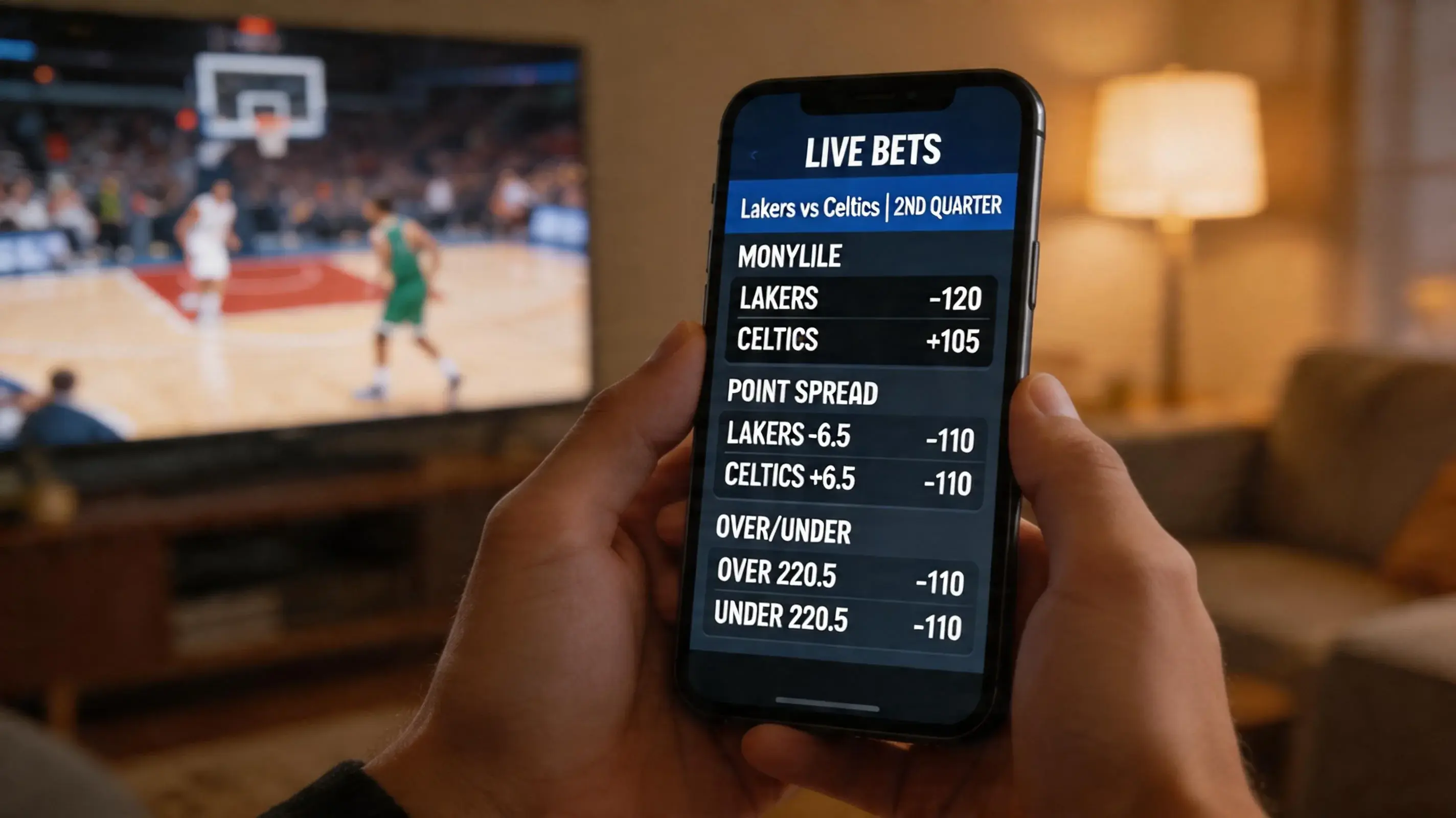
Cash-out functionality transforms basketball betting from a binary outcome into a continuous decision problem. You’re no longer just right or wrong at the final whistle; you’re managing a position throughout the game, with the option to crystallise value at any moment. This flexibility creates strategic opportunities — and psychological traps that the undisciplined fall into repeatedly.
Calculating Value in Early Bet Settlements
Cash-out offers represent the operator’s assessment of your bet’s current value given the game state. They’re calculating: what odds would they offer on your selection right now, and how does that compare to the odds you originally received? The difference, adjusted for their margin, produces the cash-out figure.
The margin embedded in cash-out offers typically exceeds standard betting margins. Operators aren’t offering you fair value for your position; they’re buying it back at a discount. This discount varies by operator, bet type, and game situation — but it’s always present. Understanding that cash-out is inherently unfavourable prevents treating it as a value-neutral decision.
Live cash-out values update continuously as games progress. The frequency varies by operator — some update every few seconds, others less frequently. During high-volatility moments like the final minutes of close games, values can swing dramatically between refreshes.
Accumulator cash-out behaves differently than single-bet cash-out. With multiple legs, some already settled and some pending, the calculation compounds complexities. Partial leg settlement affects the remaining exposure in ways that aren’t always intuitive. Understanding how your specific operator handles multi-leg cash-out prevents surprises.
Partial cash-out lets you settle a portion of your bet while leaving the remainder active. Take 50% of the cash-out value now, let 50% ride for the full potential payout. This feature offers compromise between complete certainty and complete exposure, though the mathematics still favour the house on the portion cashed out.
Cash-out availability isn’t guaranteed. Operators can suspend cash-out during certain game states — injury timeouts, replay reviews, or simply when their risk management systems flag unusual situations. Building strategies that depend on cash-out access creates vulnerability when that access disappears unexpectedly.
Decision Framework
The fundamental question: is the cash-out offer fair compensation for surrendering your position? Answering this requires estimating your bet’s true current probability of winning and comparing that to the implied probability embedded in the cash-out offer.
Consider a spread bet you placed at -110 (implied 52.4% probability). Your team now leads by 12 with eight minutes remaining. What’s the actual probability they cover from this position? Historical data might suggest 80%. The cash-out offer implies some lower probability — maybe 75% — representing the operator’s margin. You’re being offered less than fair value, as always.
But expected value isn’t the only consideration. Utility matters too. The difference between 0 pounds (bet loses) and 340 pounds (cash-out) might matter more to you than the difference between 340 pounds and 450 pounds (bet wins). Risk aversion is rational when the amounts involved are significant relative to your bankroll or financial situation.
Emotional state affects cash-out decisions in ways that pure analysis can’t capture. After a string of losses, the certainty of locking in a profit feels disproportionately valuable. After a winning streak, you might hold positions you should cash because confidence inflates risk tolerance. Recognising these biases helps, though eliminating them entirely may be impossible.
Establishing rules before games start removes emotion from the decision. “I’ll cash out any profit exceeding 5x my stake” or “I’ll never cash out with more than five minutes remaining” create frameworks that prevent in-the-moment rationalisations from overriding strategy.
Partial Cash Out
Partial cash-out creates middle-ground outcomes impossible with all-or-nothing decisions. The strategic appeal: guaranteed return plus ongoing upside. The mathematical reality: you’re accepting unfavourable terms on the cashed portion while maintaining fair exposure on the remainder.
Optimal partial percentages depend on individual risk preferences rather than universal formulas. A conservative bettor might cash 75% and let 25% ride; an aggressive one might cash 25% and let 75% ride. Neither approach dominates mathematically — they simply express different attitudes toward variance.
Progressive partial cash-out involves taking incremental portions as your position improves. Cash 20% when up comfortably, another 20% when up significantly, maintaining diminishing exposure as the game progresses. This smooths outcome distributions but accumulates margin costs across multiple transactions.
Partial cash-out makes most sense when your probability estimate differs from the operator’s and you want exposure to that disagreement while reducing overall variance. If you think the cash-out offer undervalues your position, partial cash captures some guaranteed value while maintaining stake in your assessment being correct.
Value Assessment
Reverse-engineering cash-out value reveals the operator’s probability estimate. If your potential payout is 450 pounds and they’re offering 340 pounds cash-out, they’re implying your bet has roughly 75% probability of winning (340/450). Does your assessment agree?
Disagreement with the operator’s implied probability creates interesting decisions. If you think your true win probability is 85%, the cash-out offer is terrible — you should hold. If you think it’s 65%, the cash-out offer is generous — you should take it. These divergences are where analytical bettors potentially gain edge.
Game context affects whether you should trust your assessment or the operator’s. In situations you’ve studied deeply — specific team tendencies, player performance patterns, matchup dynamics — your estimate deserves weight. In situations where you’re essentially guessing, the operator’s model probably outperforms your intuition.
Tracking cash-out decisions retroactively builds data for future calibration. Record the offer, your decision, and the actual outcome. Over hundreds of decisions, patterns emerge: are you cashing too early, leaving value on the table? Or holding too long, watching winnable positions collapse? The data reveals tendencies that self-perception might miss.
For comprehensive strategies on managing positions throughout live games, live basketball betting fundamentals contextualises cash-out within broader in-play decision-making.
When should I cash out a basketball bet early?
Cash out when the offered value exceeds your assessment of the bet’s true probability of winning, or when the guaranteed return provides utility that outweighs potential upside. Establish rules before games start to remove emotional decision-making. Consider partial cash-out to balance certainty against ongoing exposure.
How is cash out value calculated during live games?
Operators calculate what odds they would currently offer on your selection, compare to your original odds, and apply their margin. The cash-out value reflects their probability estimate minus a discount. Values update continuously, sometimes every few seconds, swinging dramatically during high-volatility moments like close game endings.
Published by the Live Basketball Betting team.