Live Basketball Betting Tips: In-Play Tactics and Timing
 Available in US
The worst live bet I ever placed came during a Clippers game three years ago. They’d just completed a 15-0 run to take a ten-point lead, and I slammed the spread without thinking. Within four minutes, the Suns had erased the deficit entirely. That loss taught me something essential: live betting rewards patience and punishes reactive emotion more brutally than any other format.
Live basketball betting generates roughly 54% of total betting volume across major markets studied globally, with dedicated in-play bettors spending nearly double what pre-match bettors spend monthly — around 1,584 dollars versus 846. The format clearly appeals to action-seekers, but the house has engineered these markets to exploit impatience. Surviving requires deliberate tactics that feel counterintuitive when adrenaline flows.
Perfecting Bet Placement During Live Quarters
Not all live betting windows offer equal value. The algorithm driving live odds updates continuously, but its accuracy varies with game context. Identifying moments when the model lags reality creates exploitable gaps.
Timeouts disrupt market efficiency. When a coach calls timeout to stop a run, the algorithm has already priced in recent momentum. But timeouts actually halt momentum more often than not — that’s why coaches use them. The seconds immediately after timeout expiration, before the next possession reveals whether the break worked, often offer value on the team that called it.
Quarter transitions create similar opportunities. Third-quarter spreads often overweight second-half performance so far, underestimating reversion to pre-game expectations. If a team trailed by 15 at halftime but has cut it to 8 through furious third-quarter play, the algorithm extrapolates that pace forward. But fourth quarters typically see pace decline and variance increase, especially in blowouts where starters sit.
Free throw situations offer micro-windows. When a player steps to the line for two shots, the market pauses momentarily. If you have strong views on that player’s free throw probability versus the market’s implied probability, these moments offer quick value plays. A 90% free throw shooter priced at 85% implied represents genuine edge, however small.
Injury news spreads through betting markets in waves. Sharp bettors with league sources often move lines before official announcements. When you see a line shift without apparent cause, someone knows something. Chasing these moves rarely works — by the time you notice, the value has evaporated. But the over-correction following confirmed injury news sometimes creates value in the opposite direction.
The final two minutes of close games present mixed opportunities. Markets become volatile as every possession carries enormous weight. If you have specific views on end-game execution — a team with elite closers, another that crumbles under pressure — these moments translate conviction into potential profit. But variance is extreme; a single missed free throw swings outcomes dramatically.
Momentum Recognition
Momentum is basketball’s most discussed and least understood concept. Runs happen; the question is whether they predict subsequent play. Research suggests momentum effects are weaker than intuition suggests — but not zero. A 19% minority of NBA games are genuinely decided in clutch fourth-quarter situations, meaning most games follow more predictable paths.
Distinguishing real momentum from statistical noise requires looking beyond the scoreboard. Is the run coming from unsustainable three-point shooting? Are defensive adjustments driving it, or lucky bounces? Is the trailing team’s best player picking up fouls, or is he just missing shots he usually makes? Context determines whether a run has staying power.
Bench play often triggers false momentum signals. When second units create runs, the algorithms react by adjusting spreads. But bench units rarely maintain production against returning starters. Recognising these unit-driven swings — and fading them before the market corrects — offers consistent edge for bettors who track rotation patterns.
Physical fatigue accumulates invisibly until it manifests in visible breakdowns. Teams on the second night of a back-to-back often look fine through three quarters before collapsing in the fourth. The market rarely prices this fourth-quarter fade adequately. I’ve found value betting against fatigued teams late in games, even when the live spread suggests they’re still competitive.
Bankroll Discipline
Live betting’s rapid resolution creates psychological traps that destroy bankrolls. The urge to chase losses intensifies when you can place another bet immediately. The temptation to press winners grows when wins compound in real time. Without ironclad discipline, these impulses overwhelm rational analysis.
Problem gambling researchers have found that sports bettors experience gambling disorders at twice the rate of other gambling populations — roughly 16% meet clinical criteria, with another 13% showing warning signs. Live betting amplifies these risks through constant availability and rapid feedback loops. Honest self-assessment matters more than any betting strategy.
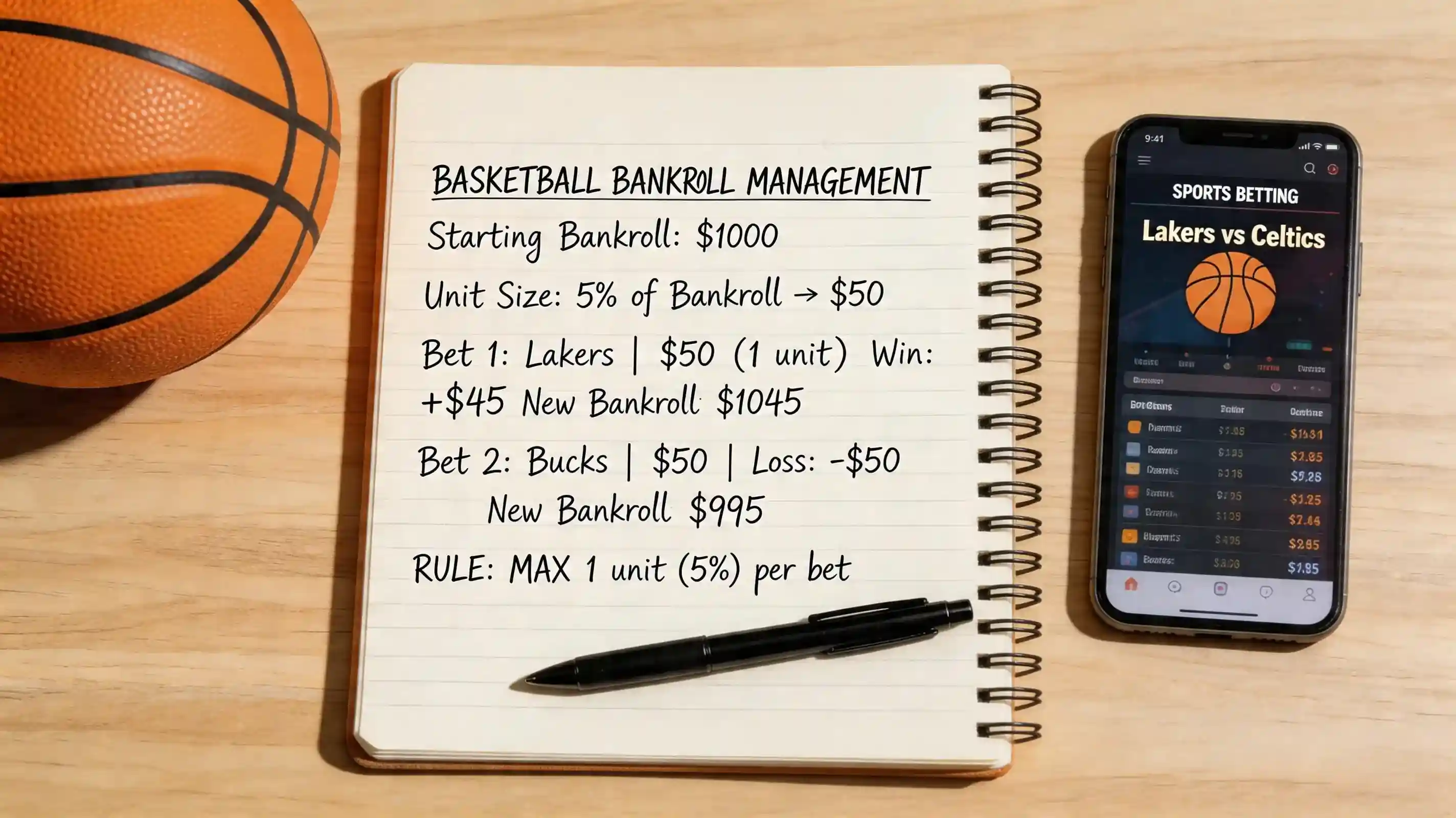
Fixed-unit staking removes emotion from position sizing. Decide before tipoff how much you’ll risk per bet — one or two percent of total bankroll is standard — and never deviate regardless of how the game unfolds. This prevents both loss-chasing and winner’s tilt from distorting stake sizes.
Session limits add another layer of protection. Determine maximum losses and wins before you start. When you hit either threshold, you stop. No exceptions. The discipline feels frustrating when you’re on a roll or convinced the tide will turn, but it prevents the catastrophic sessions that set bettors back months.
Common Mistakes
Reactive betting tops the list. Seeing a big run and immediately backing the team with momentum is precisely what the market expects. The algorithms have already adjusted. You’re buying at the top, capturing none of the value that existed before the run started.
Ignoring context kills edge. A 12-point lead means different things in different situations. Twelve points in the first quarter with both teams shooting well suggests a high-scoring game with plenty of variance ahead. Twelve points in the fourth quarter with under five minutes remaining is nearly insurmountable. The same numerical lead carries vastly different win probabilities depending on game state.
Over-betting frequency compounds margins against you. Every bet includes house edge; more bets mean more edge paid. Selective betting — waiting for genuine value rather than manufacturing action — is the only sustainable approach. Most games offer no live edges worth capturing. Accepting inaction as strategy separates survivors from casualties.
Neglecting pre-game preparation dooms live execution. Walking into a live betting session without knowing team tendencies, injury statuses, and matchup dynamics means relying entirely on in-game reaction. The bettors who win consistently do their homework before tip-off, then execute live strategies informed by that preparation.
For structured frameworks on timing these entries, explore how NBA live betting strategy applies momentum and fatigue analysis to specific game situations.
What is the biggest mistake in live basketball betting?
Reactive betting — immediately backing a team after a big run — is the most common and costly mistake. The market has already adjusted to recent momentum, meaning you’re buying at inflated prices. Patience and counter-trend positioning typically outperform chasing visible momentum.
How do I manage bankroll during live betting sessions?
Use fixed-unit staking at one to two percent of bankroll per bet regardless of game flow. Set session limits for maximum losses and wins before tipoff, stopping when either threshold is reached. These disciplines prevent loss-chasing and winner’s tilt from distorting position sizes and causing catastrophic sessions.
Published by the Live Basketball Betting team.