Basketball Moneyline Betting: Outright Match Winner Odds
 Available in US
Last March, I watched a punter in Manchester place 200 quid on the Sacramento Kings at +450 to beat the Celtics outright. No spread, no safety net — just a straight bet on a 20-win underdog toppling a championship contender. When De’Aaron Fox hit the game-winner with 0.3 seconds left, that bet paid 900 pounds profit. Pure moneyline magic.
Moneyline betting strips basketball to its essence: who wins the game? No point spreads to worry about, no totals to calculate. Just pick the winner. This simplicity appeals to newcomers and seasoned bettors alike, but the apparent straightforwardness masks strategic depth that separates profitable bettors from the masses.
Assessing Value in Favourite vs Underdog Markets
The mechanics are elementary. Favourites carry negative odds indicating how much you must stake to win 100 units. Underdogs carry positive odds showing what 100 units wins. Lakers at -180 means staking 180 to profit 100. Clippers at +150 means staking 100 to profit 150. The favourite wins more often; the underdog pays more when they pull the upset.
Understanding implied probability transforms how you see these numbers. A -200 favourite carries roughly 66.7% implied probability; a +200 underdog sits at 33.3%. These percentages always sum to more than 100% because the bookmaker’s margin lives in that gap. Your job is finding bets where actual probability exceeds implied probability by enough to overcome that margin.
UK bettors encounter moneylines in fractional or decimal format more often than American odds. The same -180 favourite appears as 5/9 fractional or 1.56 decimal. The same +150 underdog shows as 3/2 or 2.50. Converting fluently between formats prevents confusion when line shopping across multiple platforms with different display preferences.
Moneyline margins vary significantly across operators. The gap between favourite and underdog prices — often called the “overround” — typically ranges from 4% to 8% on NBA games. Lower overround means more value flows to bettors rather than the house. I maintain accounts at multiple operators specifically to capture the best available price on each side, a practice that compounds substantially across hundreds of annual bets.
Moneyline markets in basketball rarely suspend except during the most chaotic live scenarios. Unlike some sports where a single play can end the contest, basketball’s scoring frequency means bookmakers keep lines active through almost everything. This persistent availability makes moneylines the backbone of live basketball betting strategies.
Favourite Versus Underdog
The romantic narrative favours backing underdogs — longer odds, bigger payouts, the thrill of upset. But romance doesn’t pay rent. The mathematics of basketball heavily favour favourites in raw win-rate terms. Over a full NBA season, home favourites of -200 or shorter win roughly 70% of their games. Road favourites at similar prices hover around 65%.
The question isn’t whether favourites win more often — they do, consistently. The question is whether they win often enough to justify their price. A -300 favourite needs to win 75% of the time to break even. Many such favourites win only 72-73%, making them slight long-term losers despite their apparent dominance.
Underdogs between +150 and +250 represent the most interesting segment. These teams aren’t hopeless — they’re competitive but outmatched. Research into home-court advantage shows NBA teams win more than 50% of close home games, which means quality home underdogs in this range sometimes offer genuine value. The key is distinguishing home dogs who compete from those facing hopeless mismatches.
Extreme underdogs — +400 and beyond — require careful handling. These prices imply win rates below 20%, and the actual outcomes often cluster below even those pessimistic estimates. I’ve tracked massive underdog hits, and they tend to involve specific circumstances: opponent on a back-to-back, opponent resting stars, or revenge game narratives creating unusual motivation. Without such factors, fading these long shots makes mathematical sense.
Live Moneyline
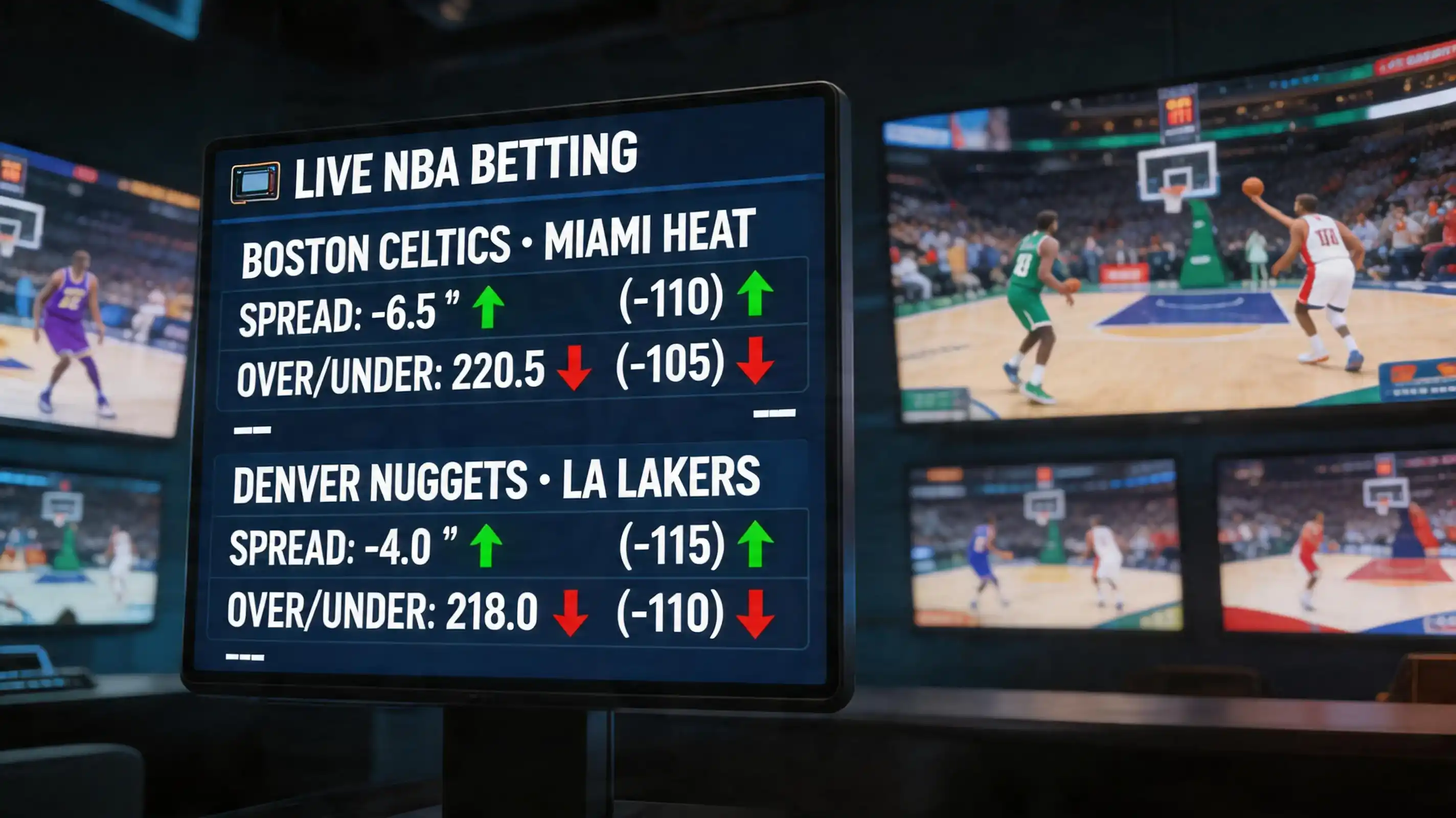
Live moneyline markets transform based on game state. A -150 pre-game favourite trailing by 12 in the third quarter might flip to +130 or longer. This creates opportunities for both sides: backing the trailing favourite if you believe they’ll rally, or hammering the leading underdog if you sense an upset brewing.
Momentum carries different weight in live moneylines than in spread or totals markets. A 10-0 run changes the moneyline more dramatically because it directly affects win probability, whilst spread lines adjust more modestly to account for regression. Understanding this differential response helps identify when one market offers better value than another mid-game.
Close games entering the fourth quarter offer particular intrigue. Two teams within three or four points create near-coin-flip moneyline scenarios. The mathematics become simple: whoever has the ball last with a chance to win holds roughly 50-50 odds in a tie game. But live moneylines during these moments often overreact to the previous possession, creating brief windows of mispricing.
Timeout usage affects live moneylines more than most bettors appreciate. A trailing team using their final timeout down four with 90 seconds left signals specific end-game tactics. The bookmaker’s algorithm adjusts, but often incompletely. Teams with elite closers — players who thrive in clutch situations — deserve better odds in these scenarios than generic probability models suggest.
Value Identification
Finding value in moneylines requires developing your own probability estimates and comparing them to market prices. If you believe the Suns have a 60% chance to beat the Jazz and they’re priced at -130 (implying 56.5%), you’ve found potential value. The discipline lies in trusting your analysis over market consensus.
Situational factors create the most consistent moneyline value. Teams playing their third game in four nights face measurable fatigue that markets sometimes underweight. Teams following emotionally draining wins — playoff clinches, rivalry games, overtime thrillers — often underperform relative to their raw talent level. These patterns don’t guarantee wins, but they shift probabilities in exploitable ways.
Line movement tells a story. When sharp money hits an underdog and the line moves from +180 to +160 without any news, someone with strong views is backing that side. Following this movement requires speed — by the time you notice, the value may have evaporated. But tracking these patterns across games builds intuition about where informed money flows.
I track closing line value as my primary diagnostic. If I bet a team at +200 and they close at +170, I’ve captured value regardless of whether they actually win. Over hundreds of bets, consistently beating the close indicates genuine skill in probability estimation. Consistently losing to the close, even when betting winners, suggests you’re reacting to market moves rather than creating them.
Combining moneyline analysis with spread considerations allows for hedging and arbitrage opportunities that pure moneyline bettors miss — understanding point spreads complements outright winner strategies effectively.
When is moneyline betting better than spread betting in basketball?
Moneylines make sense when you believe a favourite wins but might not cover the spread, or when you see value in an underdog who could genuinely pull an upset. If a team wins 65% of the time but covers only 52%, the moneyline often offers better expected value despite worse headline odds.
How do live moneyline odds shift during close games?
Close games entering the fourth quarter create near-coin-flip scenarios where moneylines become highly volatile. The odds overreact to recent possessions and momentum swings, creating brief mispricing windows. Teams within three or four points will see moneylines fluctuate dramatically with each basket, particularly in the final two minutes.
Created by the ”Live Basketball Betting” editorial team.