Basketball Spread Betting: Point Spreads and In-Play Handicaps
 Available in US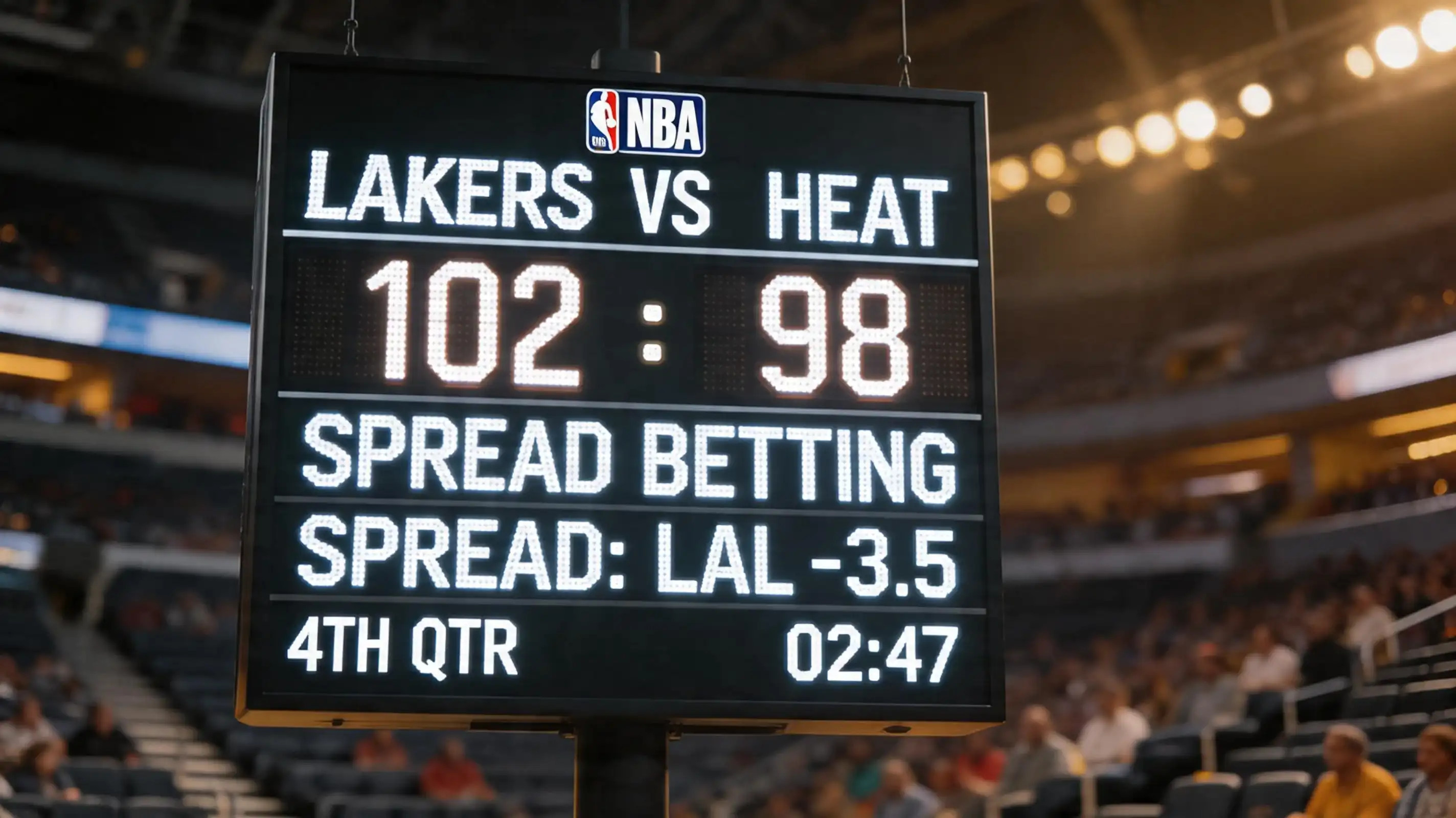
I remember my first basketball spread bet like it was yesterday — Lakers minus 7.5 against Sacramento, a game they won by exactly seven points. That half-point loss still stings, but it taught me something crucial about spread betting that no textbook ever could: understanding the mechanics is entirely different from understanding the market.
Spread betting — or handicap betting, as it’s often called in UK markets — transforms basketball from a binary proposition into something far more nuanced. Instead of simply picking a winner, you’re predicting margin of victory. This single shift creates an entirely different betting landscape, one where heavy favourites and hopeless underdogs suddenly compete on level ground.
The bookmakers didn’t invent spreads out of kindness. They did it because moneyline odds on lopsided matchups become absurd — who wants to risk five hundred quid to win fifty on a near-certain outcome? Spreads rebalance those odds, creating markets where both sides attract roughly equal action. That balance is the bookmaker’s protection. Your job is finding where that balance breaks down.
Before placing any handicap wagers, make sure you fully understand basketball betting odds and how to calculate implied probability across different formats.
Point Spread Betting Mechanics and Handicap Calculations
The concept seems simple enough: subtract points from the favourite, add them to the underdog, then determine who wins the adjusted contest. Golden State at -6.5 against Portland means the Warriors must win by seven or more for your bet to cash. Take Portland at +6.5 and they can lose by six and still cover. The half-points exist to eliminate ties, though some markets offer whole-number spreads with push possibilities.
What trips up newcomers is thinking about spreads as predictions of final margin. Bookmakers aren’t forecasting that Boston will beat Miami by exactly four points. They’re setting a number that attracts balanced two-way action. The spread reflects market perception, not objective truth. When those perceptions lag reality, opportunities emerge.
Key numbers dominate basketball spread outcomes. Games end with specific margins far more frequently than random chance would suggest. Margins of three, five, six, seven, and ten points occur disproportionately often — these are natural stopping points based on scoring increments. A spread of -6.5 versus -7.5 represents a meaningful difference because exactly seven-point margins happen frequently. Learning these key numbers transformed how I approach line shopping.
The juice — that extra 10% or so the bookmaker charges — eats into your expected returns on every spread bet. Standard odds of -110 (or 1.91 in decimal) mean you’re laying 110 to win 100. Over thousands of bets, that edge compounds. Sharp bettors obsess over finding -105 or better, because reducing vig by half a percent across your lifetime handle represents serious money.
Home court advantage typically bakes 2.5 to 3 points into basketball spreads. A team that would be -4 on a neutral court becomes -6.5 or -7 at home. This adjustment has remained remarkably stable over decades, even as pace and scoring patterns evolved dramatically. Whether it still reflects actual home advantage is a question worth investigating — I’ve found certain matchups where the market systematically overweights home court.
Live Spread Movement
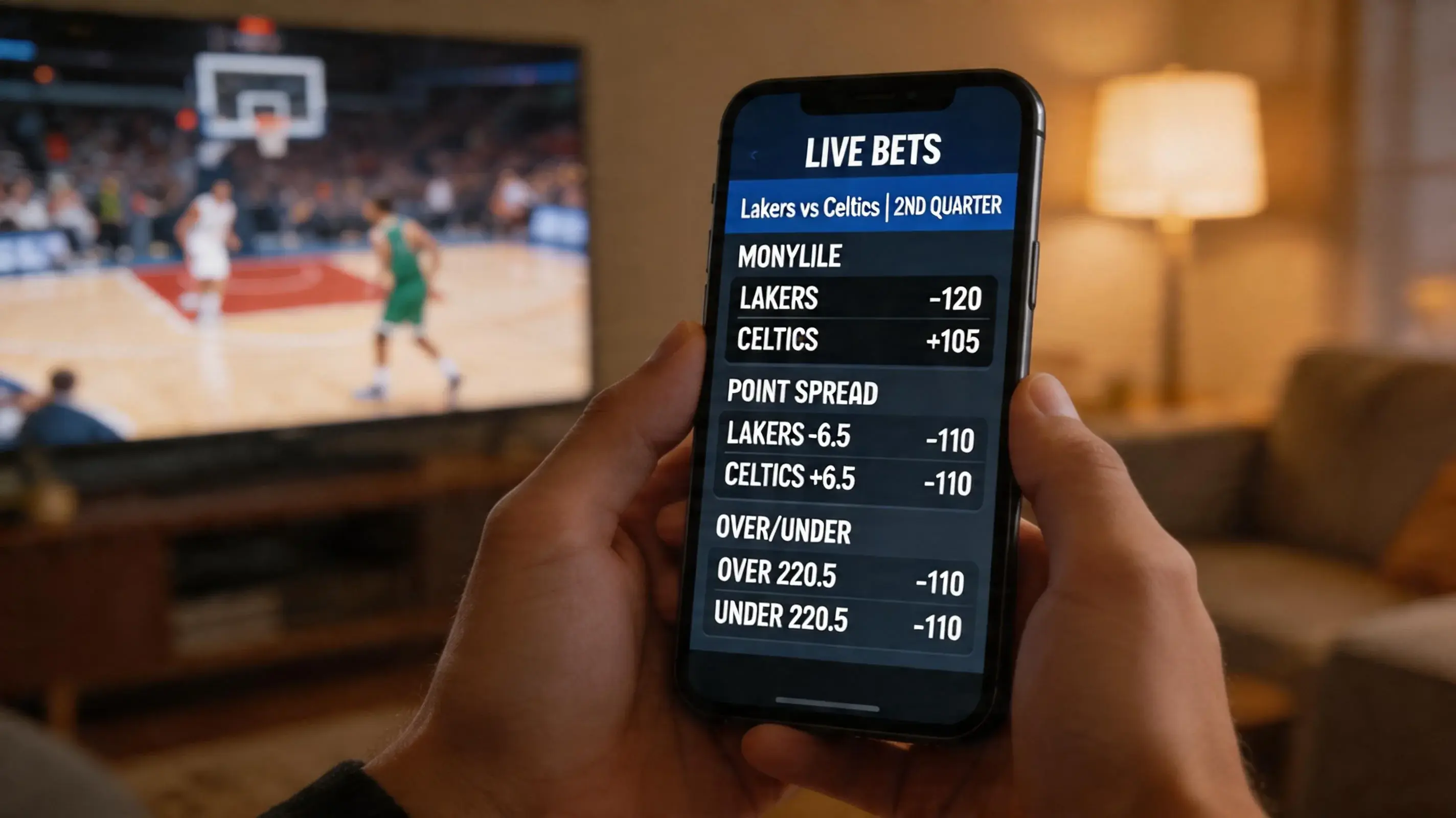
Nothing in basketball betting moves faster than live spreads. I’ve watched a halftime line shift four points in the time it took me to type my stake into a betting slip. Odds engines now recalculate every few hundred milliseconds, processing score changes, momentum shifts, and injury news in real time. Operators update spreads approximately every 200-500 milliseconds during live action — blink and you’ve missed the price you wanted.
Understanding why spreads move matters more than tracking the movements themselves. The most common cause is simply the score changing — if the pre-game spread was -7 and the favourite leads by ten midway through, the live spread adjusts to reflect remaining expected margin. But the adjustment isn’t purely mathematical. The algorithms incorporate momentum proxies, recent scoring runs, and timeout patterns.
Sharp money moves lines faster than public money. When a respected syndicate pounds a spread, bookmakers react immediately rather than waiting for their risk exposure to build. If you see a spread move half a point with no obvious cause — no score change, no injury report — someone with better information than you just placed a significant bet. Following these phantom movements requires speed and discipline.
Timeouts create micro-opportunities that casual bettors miss. A coach calling timeout to stop a run triggers a momentary pause in the action, but the live spread keeps adjusting based on what just happened. If you believe the timeout will actually stem the momentum — maybe the coach is excellent at adjustments, or the run was fuelled by fluky shooting — you can often grab the spread at inflated value before the next possession.
Fourth quarter spreads behave differently than earlier periods. As the game enters clutch time, scoring pace typically declines while variance increases. Trailing teams start fouling intentionally, distorting the normal flow that spread algorithms model. I’ve found consistent patterns in how different bookmakers handle these late-game dynamics — some adjust more aggressively than others, creating comparative value.
Alternative Spreads
Standard spreads represent the bookmaker’s market-balancing point, but alternative spreads let you express different views on margin. Buy points to reduce risk, sell points to increase potential returns. The pricing of these alternatives reveals how the bookmaker thinks about outcome probabilities across the margin spectrum.
Buying points works like insurance. Take a favourite from -7.5 to -5.5 and you’re paying a premium for protection against close wins. The cost varies with key numbers — buying through 7 is expensive because seven-point margins are common. Buying through 8 costs less because eight-point margins occur rarely. Smart point-buying targets protection at key numbers whilst avoiding expensive moves through less significant thresholds.
Selling points offers value in blowout scenarios. If you believe the Celtics won’t just beat the Hornets but will destroy them, selling points from -9.5 to -13.5 massively improves your payout. The risk is obvious — now a comfortable 11-point win costs you the bet. But when you have strong conviction about margin, not just outcome, alternative spreads let you profit from that conviction.
Teaser bets combine point adjustments across multiple games. A standard basketball teaser moves each spread by four points in your favour, but requires all legs to cover. These products have known mathematical properties — certain combinations offer neutral or positive expected value depending on the specific numbers involved. The key is identifying teaser-friendly lines rather than forcing the product onto every card.
Spread Versus Moneyline
The eternal question: when should you take the spread versus the moneyline? There’s no universal answer, but the mathematics point toward clear principles. Moneylines make sense when you believe the favourite wins but might not cover, or when spread juice exceeds moneyline value. Spreads make sense when you have opinions about margin specifically.
Consider a -3 favourite at -110 on the spread versus -150 on the moneyline. If you believe they win 65% of the time but cover only 52% of the time, the moneyline offers better expected value despite the worse headline odds. Conversely, if you think they cover 55% of the time, the spread’s standard juice beats laying -150. Working through these calculations for each bet separates systematic bettors from recreational punters.
Underdogs present the opposite calculation. A +8 underdog at +260 on the moneyline might seem appealing, but if they cover 45% of the time whilst winning outright only 15% of the time, the spread is clearly superior. The larger the spread, the more this dynamic tends to favour spread betting — blowouts are common enough that huge underdogs often cover despite losing convincingly.
Live betting complicates these relationships. Spreads adjust continuously whilst moneylines can become illiquid or suspended during key moments. Having flexibility to move between markets as conditions change gives you an edge over bettors locked into one approach. Building this flexibility into your process takes practice but pays compounding dividends.
Enhance your overall handicapping skills by exploring the comprehensive resources available on our expert basketball betting portal.
For more detail on combining spread selections with other markets, explore how basketball totals interact with spread dynamics within the same game.
What does a -5.5 spread mean in basketball betting?
A -5.5 spread means the favourite must win by six or more points for your bet to cash. The half-point eliminates ties — the team either covers or doesn’t. Conversely, taking the underdog at +5.5 means they can lose by five points and your bet still wins.
How do live spreads adjust during a basketball game?
Live spreads recalculate every 200-500 milliseconds based on score changes, momentum shifts, and game flow. A team leading by more than the pre-game spread will have their live spread reduced, whilst trailing teams see their spread advantage increase. Sharp money, injury news, and timeout patterns also trigger immediate adjustments.
Prepared by the Live Basketball Betting editorial staff.