NBA Live Betting Strategies: Momentum Shifts and In-Play Tactics
 Available in US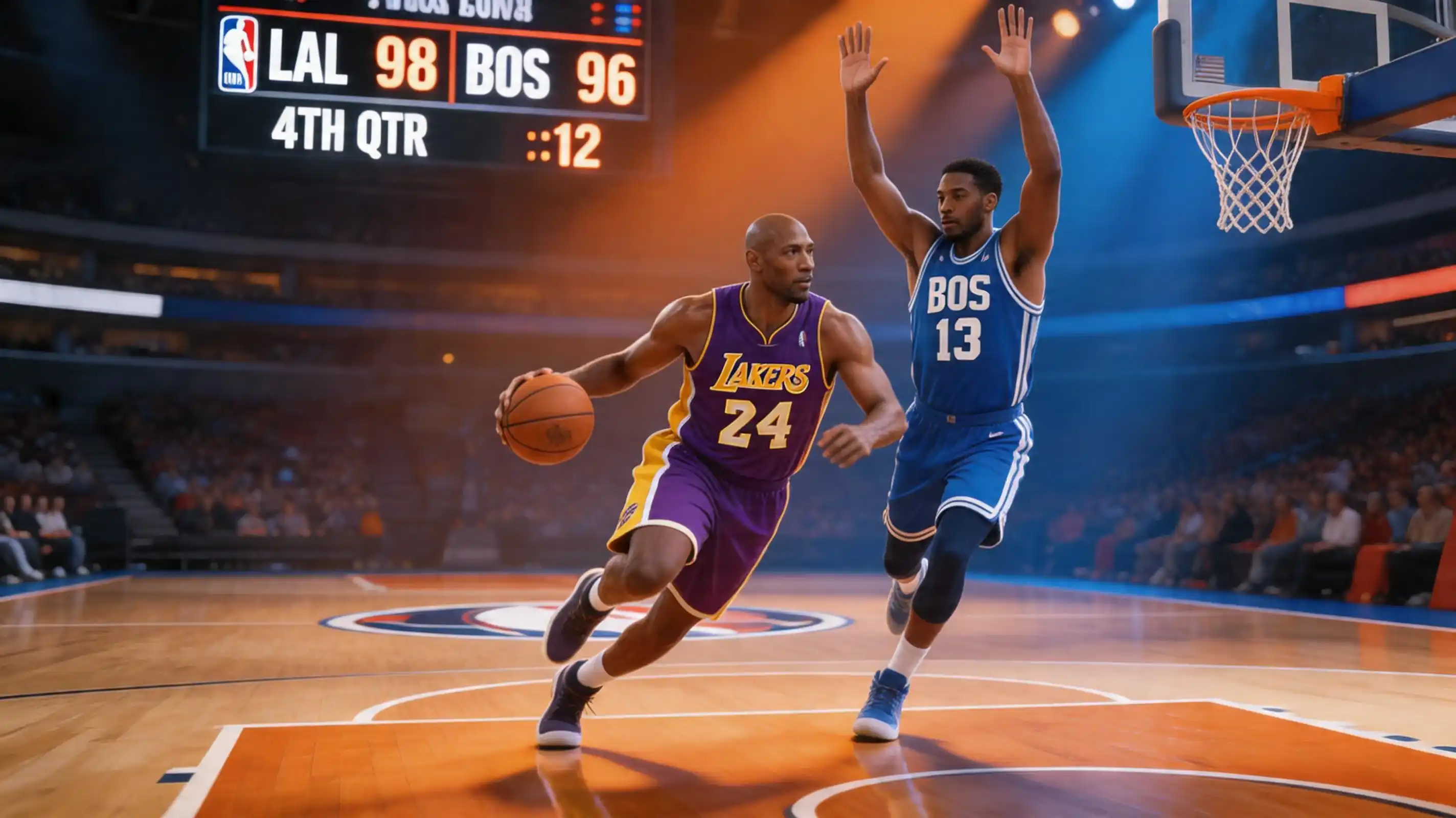
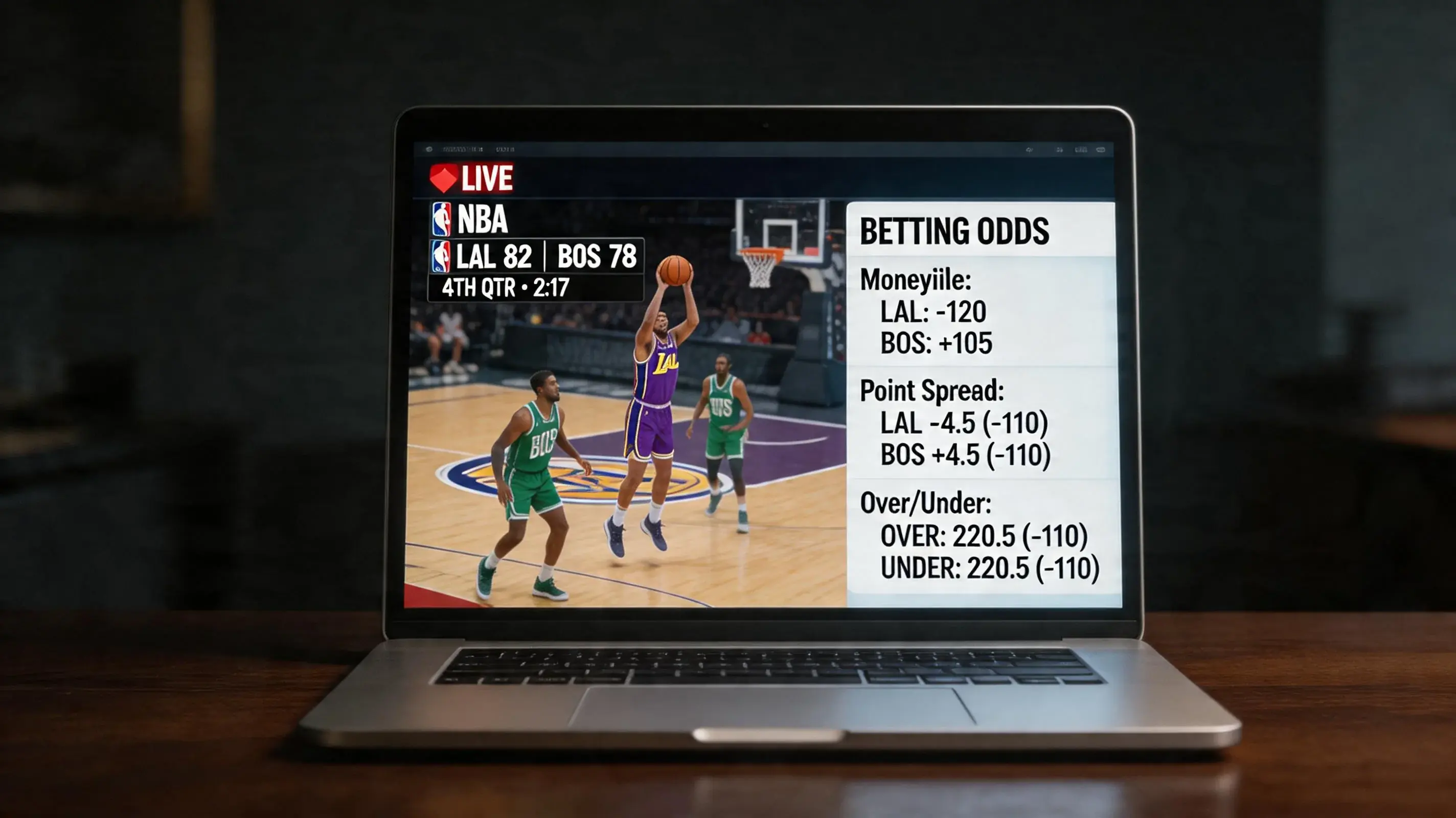
Three minutes into the third quarter of a Lakers-Celtics matchup last season, I watched the live spread swing by 4.5 points in under ninety seconds. No injury. No ejection. Just a 9-0 run that completely shifted the game’s narrative. That swing represented one of the purest opportunities I have seen in NBA live betting – and most punters missed it entirely because they were still processing what happened.
After nine years of covering basketball betting markets, I can tell you that NBA live betting is not just another way to wager. It is a fundamentally different discipline. Basketball is the fastest-growing segment for betting growth through 2030, driven by the sport’s frenetic pace and the sheer volume of in-game opportunities. Roughly 55% of all wagers on major sportsbooks now come through live betting channels. The NBA, with its constant scoring, frequent momentum swings, and predictable fatigue patterns, is purpose-built for this style of play.
This guide breaks down the tactical elements that separate informed live bettors from those chasing the action. We will examine momentum dynamics backed by academic research, dissect fourth quarter patterns that the odds engines struggle to price correctly, and identify the scheduling factors that create genuine edges. Every concept here comes from practical application – strategies I have tested across thousands of games, refined through both wins and painful lessons.
To maximize your in-play profits, consider combining these momentum tactics with advanced NBA prop betting strategies for individual player performances.
Capitalising on In-Play Momentum Shifts for NBA Betting
I still remember the first time I truly understood momentum in basketball betting. It was a playoff game, second round, and a team down by fourteen points came roaring back with a 22-6 run spanning barely six minutes of game time. The live spread did not just move – it collapsed entirely, then overcorrected in the other direction. That sequence taught me something crucial: momentum is not just a commentator’s buzzword. It is a quantifiable force that drives market inefficiencies.
Academic research confirms what experienced bettors observe in real time. Analysis of over 2,295 NBA games across a decade reveals that 19% of games are ultimately decided in the fourth quarter, where pace drops to 90-100 possessions. This compression creates predictable patterns. When momentum shifts occur early in quarters, the market typically overreacts because algorithms struggle to distinguish between sustainable runs and statistical noise.
Home teams win more than 50% of close games, a pattern that becomes particularly pronounced during momentum swings. The crowd effect is real, measurable, and consistently underpriced when visiting teams are on runs. I have found that betting against road team momentum in close games – particularly in the third quarter before markets fully adjust – offers some of the most reliable value in live betting.
The key distinction here is understanding when momentum represents a fundamental shift versus when it is simply regression to the mean waiting to happen. A team shooting 80% from three over a six-minute stretch will not maintain that clip. But a team that has suddenly started winning the rebounding battle or forcing turnovers through defensive intensity? That momentum often has legs.
My approach centres on identifying the source of any run. Scoring bursts driven by unsustainable shooting fade quickly. Runs built on defensive pressure, transition opportunities, and second-chance points tend to persist. The live betting markets rarely make this distinction in real time, which is precisely where the edge lives.
Reading Momentum Shifts in Real Time
Scott Kaufman-Ross, the NBA’s Senior Vice President for Fantasy and Gaming, has emphasised that the sports betting industry recognises the value of official data, particularly for in-play betting. That recognition exists because real-time data feeds are the lifeblood of momentum analysis. Without them, you are flying blind.
When I watch games for live betting purposes, I track specific indicators that precede momentum shifts rather than react to them after they occur. Ball pressure is the first signal. When a team’s perimeter defence suddenly tightens and forces catches further from the basket, a run often follows within three to four possessions. The box score will not show this – you need to watch the game or have access to advanced tracking data.
Rebounding rate shifts offer another leading indicator. A team that secures three consecutive offensive rebounds is not just getting extra possessions. They are demoralising the opponent and energising their own bench. I have tracked these sequences extensively, and the correlation between sudden rebounding dominance and subsequent scoring runs is remarkably strong.
Pace changes matter enormously. Teams that successfully slow the game after trailing often do so as a conscious strategic adjustment. When a trailing team reduces their pace by more than five possessions per 48 minutes compared to their season average, they are typically executing a game plan rather than floundering. This is often the moment to consider backing them at inflated live odds.
The audio cues from the arena provide information you cannot get from any data feed. Crowd noise shifts, bench reactions, and the general energy level all telegraph momentum changes before they fully manifest in the score. Watching with sound, preferably from a broadcast that captures arena atmosphere, is not optional for serious live betting. It is essential.
Timeout Impact on Live Lines
The timeout is the most underappreciated live betting trigger in basketball. Coaches use timeouts strategically, and those decisions contain information the betting market often fails to incorporate quickly enough.
When a team calls timeout while on a run, they are typically trying to maintain energy and set up a specific play. When a team calls timeout while being run off the floor, they are attempting to disrupt opponent rhythm and make defensive adjustments. These two scenarios have very different implications for what happens next, yet the live markets treat them almost identically.
I have developed a simple timeout classification system. Offensive timeouts called during your own run usually result in an immediate cooling period – the opposing coach has time to adjust, and the psychological break disrupts rhythm. Defensive timeouts called to stop opponent momentum are far more effective, with trailing teams covering the immediate post-timeout spread roughly 54% of the time in my tracking.
The dead ball period itself creates opportunity. During the two minutes or so of a full timeout, oddsmakers have time to reassess, which often means spreads tighten from their extremes. But here is what many bettors miss: the market typically overcorrects toward the recent trend. If a team was on a run before the timeout, the post-timeout line often overestimates their likelihood of continuing. If a team was struggling, the market sometimes offers too much value on their recovery.
My approach is straightforward. I rarely bet during live action when events are unfolding rapidly. Instead, I wait for timeouts, halftime, and quarter breaks to assess the situation properly and place wagers when the market has had a moment to breathe but has not yet fully processed the game’s nuances.
Fourth Quarter Dynamics
I learned the hard way about fourth quarter dynamics early in my betting career. Backed a team to cover a live spread of -6.5 with eight minutes remaining, felt confident when they went up twelve with four minutes left, then watched in disbelief as they intentionally surrendered points and ran out the clock with a six-point lead. The bet lost by half a point. That was an expensive education in how NBA games actually end.
The fourth quarter operates under entirely different principles than the first three. Research analysing nearly 2,300 games over a decade confirms that 19% of NBA games are effectively decided in this final period, with pace dropping significantly to 90-100 possessions. But it is not just the pace that changes – the entire strategic approach shifts.
Physical decline between the first and fourth quarters shows an effect size of -1.27, a substantial drop that manifests in lower shooting percentages, more turnovers, and reduced defensive intensity on contests. This fatigue factor is remarkably consistent across teams and game situations, yet live betting markets struggle to price it correctly because the algorithms are calibrated primarily on first-half data patterns.
Leading teams in the final five minutes play fundamentally different basketball. They run clock, take lower-variance shots, and actively avoid fouling. Trailing teams press, gamble defensively, and create chaotic game states. Understanding this asymmetry is crucial for quarter betting markets and for evaluating live spreads.
The most common mistake I see in fourth quarter live betting is applying first-half mental models to late-game situations. Early in games, a six-point lead is practically meaningless. Late in games, a six-point lead with a team that controls pace is nearly insurmountable against the spread. These are completely different betting propositions, and pricing them identically guarantees losses over time.
Pace Changes in the Final Period
Pace manipulation in the fourth quarter is the closest thing basketball has to a guaranteed outcome. Leading teams will slow down. Trailing teams will speed up. The only question is by how much, and whether the betting market has properly accounted for it.
When a team leading by eight or more enters the fourth quarter, their pace typically drops by 4-7 possessions per 48 minutes compared to their season average. This compression has predictable effects on total points scored and on individual player performance metrics. Star players often see reduced minutes or shift into facilitation roles, fundamentally changing their statistical output.
For live total bets, this pace shift is critical. Fourth quarter unders become significantly more attractive when the leading team controls tempo and the trailing team lacks the defensive personnel to force turnovers. I track each team’s fourth quarter pace differential – the gap between their normal pace and their clutch time pace – and use it to identify when totals are mispriced.
The challenge is that pace changes are not immediate. A team trailing by ten with eight minutes left might still play at normal pace, hoping for a run. But once the deficit reaches twelve or fourteen with under five minutes remaining, desperation mode kicks in. The transition between normal play and desperate play is where the most significant mispricing occurs.
I have found that betting fourth quarter unders once a game settles into clock management mode offers consistent value. The key is waiting until you see clear evidence of pace manipulation – intentional walks to the free throw line, excessive dribbling in the half-court, and deliberate fouling strategies – before placing the wager.
Clutch Performance Patterns
There is a persistent myth in basketball that certain players elevate their games in clutch moments while others shrink. The reality is more nuanced and more useful for betting purposes.
Clutch statistics – typically defined as performance in the final five minutes of games within five points – show significant variance from player to player, but this variance often regresses to career averages over time. A player shooting 50% from the clutch over a ten-game sample is not necessarily a clutch performer. They might simply have had favourable shot selection and defensive matchups during those specific moments.
What does persist, and what does matter for live betting, is shot creation ability under pressure. Players who can generate their own shots against set defences tend to maintain effectiveness in late-game situations. Players who rely on system offence or advantageous matchups often struggle when defences tighten and schemes simplify in crucial moments.
The betting implication is straightforward. When a game enters clutch time and one team has a clear advantage in isolation scoring ability, the live spread should reflect that edge more than it typically does. Markets tend to weight recent game flow too heavily and not heavily enough weight playoff-style basketball, which is what fourth quarters of close games essentially become.
I maintain a personal list of high-volume clutch performers – players who consistently take and make difficult shots in late-game situations across multiple seasons. When their teams enter clutch scenarios as slight underdogs, there is often value to be found. The market underweights individual brilliance in favour of team-level statistics that become less relevant when the game slows down and possessions become precious.
Fatigue and Scheduling Factors
The NBA schedule is a monster of logistics. Eighty-two games spread across six months, with teams crisscrossing time zones, playing on consecutive nights, and managing load for ageing superstars. All of this creates exploitable patterns in live betting markets.
NBA teams now play an average of 14.9 back-to-back games per season, down 23% over the past decade. The league has actively worked to reduce scheduling stress, but back-to-backs remain unavoidable, and their effects on performance are both significant and underpriced.
Fatigue manifests differently in live betting than in pre-match markets. Pre-match odds account for known scheduling disadvantages through line adjustments. Live betting markets are less efficient because fatigue effects compound as games progress. A team on the second night of a back-to-back might look fine in the first half, then visibly tire in the third quarter as legs give out and defensive rotations slow.
I have developed a fatigue projection model that accounts for not just back-to-backs but also travel distance, time zone changes, and games played in the previous seven days. Teams on the third game in four nights after transcontinental travel show measurably worse fourth quarter performance regardless of how the first three quarters unfold.
The practical application is to watch scheduled fatigue factors but wait to bet until fatigue actually manifests on the court. A fresh team does not become tired simply because the schedule says they should be. But when you see defensive lapses, transition opportunities conceded, and rotations shortened because bench players cannot provide relief, the fatigue discount should kick in immediately – often before the live odds fully reflect it.
Back-to-Back Impact
Back-to-back games are the most obvious scheduling factor and the one the betting market has largely figured out for pre-match purposes. The edge in live betting comes from understanding how back-to-back effects develop over the course of a game.
Teams on the second night of a back-to-back typically show minimal performance decline in the first quarter. Adrenaline, preparation, and professional conditioning mask the fatigue that will come later. By the third quarter, however, the physical toll becomes measurable. Defensive effort drops, rebounding percentage declines, and half-court execution becomes less crisp.
The effect is magnified by travel. A team playing in Los Angeles on Tuesday night, then flying to Boston for a Wednesday game, faces a significantly greater challenge than a team playing home back-to-backs. Time zone adjustment, disrupted sleep, and the physical stress of travel compound the basic fatigue of consecutive games.
For live betting purposes, I never back a team on a difficult back-to-back in the second half unless the odds are exceptionally attractive. Conversely, I actively look to bet against back-to-back teams in the third quarter when the game is close and fatigue should be starting to bite.
Star player management adds another dimension. Many teams now rest their top players on one night of back-to-backs, but the decisions are often made close to game time. When a star plays on the first night and then appears on the second night despite the schedule, fatigue risk increases substantially. The team chose to push their player rather than rest them, which suggests either desperation or misjudgement – neither of which is good for live betting their side.
Rest Days Advantage
The flip side of fatigue is freshness, and rest advantages create their own set of live betting opportunities.
Teams with three or more days of rest historically outperform expectations in the first quarter, presumably because their preparation time and physical recovery translate into sharper early execution. This advantage tends to fade as games progress, as the rested team has to actually play the game and the conditioning equalises.
For live betting, the rest advantage is most valuable when it coincides with other factors. A rested team at home against a fatigued opponent offers a genuine edge, but the pre-match lines typically reflect this obvious advantage. The live value comes when the rested team falls behind early – often through shooting variance or early foul trouble – and the market overcorrects by pricing in a momentum shift that the rest advantage should help them withstand.
I track rest differentials as a tiebreaker rather than a primary factor. When two teams are evenly matched and the game is close entering the fourth quarter, rest advantage becomes more significant because physical reserves matter more in crunch time. A team with two extra rest days has more left in the tank for the final push.
The All-Star break and late-season schedule quirks create the most extreme rest differentials. Teams with a full week off sometimes come out flat, showing the basketball equivalent of jet lag. But once they shake off the rust – usually by midway through the second quarter – their freshness becomes a weapon. Patience is required to capture this value.
Foul Trouble Betting
Last January, I watched Giannis Antetokounmpo pick up his third foul with six minutes left in the first half. The live spread moved by three full points within two minutes. By halftime, it had corrected by 1.5 points. That overcorrection – the market’s initial panic followed by recalibration – is the foul trouble betting opportunity in microcosm.
Foul trouble creates immediate, visible, and quantifiable changes to a game’s dynamics. A star player forced to the bench alters both their team’s offensive ceiling and their defensive anchor responsibilities. But the betting market’s response to foul trouble is almost always too aggressive in the short term.
My approach to foul trouble betting is contrarian by design. When a key player picks up their second foul in the first quarter, the market assumes they will sit and their team will suffer. But NBA coaches have become increasingly willing to play through early foul trouble, particularly with elite players. The expected negative impact is often larger than the actual impact, creating value on the team losing their player.
The exception is when foul trouble affects multiple rotation players simultaneously. A team that loses its starting centre to foul trouble can adjust. A team that loses its starting centre and primary backup faces a structural problem that will manifest throughout the game. Multiple foul trouble situations warrant larger market moves than single-player situations, yet the market often treats them similarly.
Context matters enormously. A physical big man in foul trouble against a team with limited interior presence is less concerning than a perimeter defender in foul trouble against an elite isolation scorer. I evaluate foul trouble through the lens of how it changes specific matchups rather than treating it as a generic handicap.
The timing of my foul trouble bets is crucial. I rarely bet immediately after foul trouble occurs because that is when markets are most volatile and least efficient. Instead, I wait for the initial move, watch how the affected team adjusts, and then assess whether the market has overcorrected. Ten minutes of game time with the player on the bench usually provides enough information to make a more informed wager.
Live Timing Windows
Understanding when to bet is as important as understanding what to bet. Live basketball betting is not a continuous opportunity – it is a series of discrete windows where value concentrates and then dissipates.
Modern odds engines recalculate probabilities every 200-500 milliseconds, processing player tracking data, possession changes, and scoring events in near real-time. Competing against these systems on speed is pointless. The edge comes from processing information that the algorithms handle poorly: strategic adjustments, fatigue patterns, and momentum sustainability.
My preferred betting windows are structured breaks in play. Quarter breaks offer two to three minutes to reassess without missing any action. Halftime provides even more breathing room. Extended timeouts and injury breaks create smaller windows. During these pauses, I can evaluate the game state, check my models against current lines, and place deliberate wagers rather than reactive ones.
The worst time to bet is immediately after significant events – a big run, a controversial call, or an injury. Markets are most efficient when they have just processed new information. Markets are least efficient during quiet stretches when nothing dramatic has happened but underlying factors have shifted. A team slowly tightening its defensive rotations over three minutes is not dramatic, but it is information the algorithms might miss.
I also avoid the final two minutes of close games unless the situation is extreme. Markets during crunch time are heavily watched, quickly adjusted, and offer minimal edge. The variance is high, and the odds reflect maximum market attention. Earlier in games, I face less competition from sharp bettors who focus their attention on late-game situations.
Discipline around timing is the hardest skill to develop in live betting. The action is constant, the opportunities seem endless, and the temptation to bet through every dramatic moment is powerful. But restraint – waiting for genuine value rather than manufactured excitement – is what separates profitable live betting from expensive entertainment.
For more comprehensive insights and real-time market analysis, always refer to our live basketball betting guide before placing your wagers.
Frequently Asked Questions
How do back-to-back NBA games affect live betting odds?
Back-to-back games create fatigue effects that compound as games progress. First quarter performance typically shows minimal decline, but by the third quarter, teams on the second night of a back-to-back demonstrate measurably worse defensive intensity, rebounding rates, and half-court execution. Live odds adjust for known scheduling factors but often underestimate how fatigue manifests later in games, creating value opportunities when betting against tired teams in second halves.
What momentum indicators should I watch during NBA live betting?
Focus on leading indicators rather than scoring runs themselves. Ball pressure and defensive positioning shifts often precede momentum changes by three to four possessions. Sudden rebounding dominance – particularly three or more consecutive offensive rebounds – correlates strongly with subsequent scoring runs. Pace changes also signal strategic adjustments, with trailing teams slowing deliberately often executing a game plan rather than struggling.
When is the optimal time to place a fourth quarter live bet?
Wait until you observe clear evidence of pace manipulation before betting fourth quarter markets. Once leading teams begin running clock, taking low-variance shots, and avoiding fouls, the game has transitioned into a fundamentally different mode. Betting unders after this transition typically offers better value than betting during the uncertain early fourth quarter when both teams might still be playing at normal pace.
How does foul trouble create live betting opportunities?
Foul trouble causes immediate market overreaction. When a star player picks up early fouls, the live spread typically moves aggressively, often by two to three points. However, NBA coaches increasingly play through early foul trouble with elite players, meaning the expected negative impact exceeds the actual impact. Waiting ten minutes after foul trouble occurs allows you to assess how the team adjusts before betting, rather than reacting to initial market panic.
Created by the ”Live Basketball Betting” editorial team.